
Monday, July 11, 2011

Eat The Baby!

dutch-baby-ian-knauer-farm.jpg

It's been an ongoing fantasy of mine to build an outdoor wood-burning pizza oven here at the farm. It's high on my list of projects, and this coming weekend I'm going to meet John Schwarz and John Hickey at the Smallholding Festival in Ottsville, Pennsylvania. They will be fielding questions and demonstrating how to build an earthen oven. I expect to come home with all the information I need to cross the pizza oven off the to-do list.

(By the way, if you're within driving distance of Ottsville, you should come to the festival this Saturday, July 9; for more information, go to thesmallholdingfestival.com. I'll be there spit-roasting Pennsylvania Dutch-influenced porchetta.)

The impetus behind building a wood-burning oven is not just to take advantage of wood smoke as a flavoring agent. It's to get me out of the kitchen on sweltering summer days. The farm has no air-conditioning. On prickly, humid days, even the thought of turning on the oven leaves me a little nauseous--but not enough to make me want to eat salad for every meal.

Back in the day, my family had a solution for this problem. Just off the back of the farmhouse was a little shack. It had a rough wooden floor and a slanted tin roof. Inside was a washbasin and a cast-iron wood-burning stove they used to cook on. The structure was torn down in the early 1970s, but my aunts and uncles who remember it still call it the summer kitchen.

What a good idea! An outdoor kitchen to use in the summer when it's hot. Huhh.


outside-baby-ian-knauer-farm.jpg

My pizza oven, when it exists, will be the stove I use for baking during the summer. At least that's the plan. The problem is that I want to bake now. I explained this to one of my aunts, Denise, as I was asking about the old summer kitchen. She had a temporary (and not a little dangerous) solution. At her house, she plugs a portable convection oven into an extension cord, places the oven outside, and cranks it up to high heat. She makes pizza and bread and brownies and, my favorite, Dutch Baby, which she serves with berries. (Note: We do not recommend hauling your oven outside, ok? So please do not try this.)

Dutch Baby is a large pancake/popover that's cooked in a cast-iron skillet at about 450 degrees. That's hot, but if you're lucky enough to have a summer kitchen, who cares? But even if you don't have the space to build your own outdoor wood-burning oven, or you're like me and keep putting the project off, this recipe is worth sweating for--or at least cranking up the A/C.

plated-ian-knauer-farm.jpg

Dutch Baby
Serves 6

Berries:
1 cup assorted berries
1/2 cup sugar
2 Tbsp. orange liqueur

Batter:
1/3 cup sugar
1/4 tsp. cinnamon
3 large eggs (remove from refrigerator 30 minutes before using)
2/3 cup whole milk, room temperature
2/3 cup all-purpose flour
1/4 tsp. pure vanilla extract
1/4 tsp. kosher salt
4 Tbsp. (1/2 stick) unsalted butter, cut into pieces
Special Equipment: You'll need a 10" cast-iron skillet.

For the berries: Stir together berries, sugar, and liqueur in a bowl and let stand at room temperature until ready to serve.

For the batter: Put skillet on middle rack in oven and preheat to 450 degrees. Stir together sugar and cinnamon in a small bowl; set aside.

Beat eggs with an electric mixer at high speed until pale and frothy, then beat in milk, flour, vanilla, and salt and continue to beat until smooth, about 1 minute more (batter will be thin).

Put butter into hot skillet and let melt, swirling to coat. Add batter and immediately return skillet to oven. Bake until puffed and golden-brown, 18-25 minutes.

Serve immediately, topped with berries and cinnamon-sugar mixture.

Monday, July 4, 2011

And so, I'm a weed farmer...

This pot can also be read on bonappetit.com
ian-knauer-farm-weeds.jpgWeeds? Purslane? What's the difference?

If you keep a garden year after year, you start to notice which plants take naturally to the soil and the climate that are specific to your plot and which do not. Each little pocket of farmland has its own microclimate and the plants respond to it.

Tim Stark is a Pennsylvania farmer who lives and farms about 30 minutes from me. He sells his goods at New York City's Greenmarket every Saturday and penned a funny and moving book, Heirloom, all about his tomatoes, for which he has become famous. Tim's tomatoes are used at many, if not most, of New York's top-end restaurants, including Blue Hill at Stone Barns, where the staff grows many of its own vegetables but has come to accept that Tim's tomatoes are superior.

I live quite close to Tim's farm, yet tomatoes are always a struggle for me. I add oyster shells and compost to the soil, I give them space to grow, I trim them back when they need it... Tim does none of this. His tomato plot looks more like a forest than a garden, yet his tomatoes are so much better. He just has the perfect microclimate for tomatoes, I guess.

I have the perfect microclimate for weeds.

ian-knauer-farm-purslane.jpgPurslane grows just about everywhere, so take advantage!

I could spend hours each day pulling weeds and I would still have more weeds than vegetables. When I first started keeping this garden, I felt frustrated at how quickly and thickly the weeds grew. Now, I just accept it. In fact, I even encourage the weeds, because within the wild tangle there is a hidden gift: purslane.

My friends tease me that I feed them grass from the driveway as salad when they visit the farm in the summer. In fact, there's a lot of truth to that. The summer months are teeming with wild edible greens that, when tossed together with a simple lemon vinaigrette, become the most satisfying summer salad there is. Purslane grows just about everywhere--including along the driveway of the farm. I have found it growing in Brooklyn and in Central Park. It spreads over sidewalks and in alleyways all over the States. It grows especially well in my garden.

And so, I'm a weed farmer. But even you'll admit, in a salad like the one below, weeds can be pretty great eating.

ian-knauer-purslane-salad.jpg

Purslane Salad
6 servings

It's lemony in flavor and has a crisp crunch to it. It makes for a perfect base to this salad. If you're not adventurous enough to forage your own purslane, you can find it at almost every farmers' market in the summer. It's also called pigweed, little hogweed, or verdolaga, depending on where you live.

1 Tbsp. fresh lemon juice
1 Tbsp. finely chopped shallot
1/2 tsp. kosher salt
1/4 tsp. freshly ground black pepper
3 Tbsp. extra-virgin olive oil
1/4 mixed cherry or small ripe tomatoes (halved or quartered if large)
6 cups tender purslane leaves (about 1 lb.)
4 cups mixed baby greens (such as arugula, flat-leaf parsley leaves, lamb's quarters, spinach, and mizuna)

Combine lemon juice, shallot, salt, and pepper in a large bowl; whisk in oil. Add tomatoes, purslane, and greens; toss until coated.

Sunday, June 26, 2011

Local, Schmokle.

lobster-and-beer-farm-to-table.jpg

Last week, my father and I sat on the farmhouse porch swing and polished off a quart of three-day-old strawberries that were long past their prime. They'd started to soften and turn. We ate them anyway. Dad popped one in his mouth and told me that when he was a kid, he and his siblings (there are seven of them) would wait with bubbling anticipation for their father's strawberries and asparagus. The winter's canned food and potatoes would have grown so dull that by May and June the fresh, early summer berries and veggies were thrilling. Then he told me that all they ate for two months was asparagus and strawberries. By late June they would have eaten so much of the two that they'd be ready for another ten months without either. There was never any asparagus to be had in October, and that was just fine.

Today we live in a different world. If you want asparagus or strawberries in October, just go buy some. If you want a banana and you happen to live in Ohio, that's not a problem. Our world is small and seasonless, and that's one reason why there has been such a cry for "local" and "seasonal" eating: Mostly, we don't eat locally or seasonally, and, well, people often want what they don't have.

And, let's be honest, even those of us who tout those ideals don't always follow them. I grow my own food and hunt for meat, but I cook with Spanish olive oil and French sea salt. I drink wine from California--which is quite a bit farther from this Pennsylvania farm than Long Island, or the Azores for that matter--because I prefer it; because I can. This week, as I was making a dinner of roast chicken and asparagus with some strawberries for dessert, I thought to myself, "I'm sick and tired of asparagus and chicken and strawberries. What I really want is a lobster roll." So I went to the store and I bought a lobster. It was from Maine, which is closer than, say, France, but certainly not local.

The lobster roll really hit the spot, too.

It seems likely that by next week the first of the zucchini will be ready, and I am bubbling with anticipation for it. I haven't eaten any zucchini since last September, when I'd become so sick and tired of eating it that I swore off it until its return in July. Now I'm looking forward to eating the squash. Maybe I'll make it into a salad for lunch...with a glass of California wine.

lobster-roll-farm-to-table.jpg

Lobster Rolls
6 servings

I'd never been a fan of lobster rolls. They're so often too mayonnaise-y and usually a letdown. Then I tried one made by a colleague of mine at Gourmet--Kay Chun, who's now a deputy food editor for this magazine--and her twist on the New England summer staple changed my mind. This version of the lobster roll, based on Kay's, is a delicious American classic.

4 1/4-lb. cooked lobsters
3 Tbsp. fresh lemon juice
3/4 tsp. kosher salt plus more for seasoning
1/3 cup extra-virgin olive oil
1 large ripe tomato, chopped
1/3 cup thinly sliced scallions
1/4 cup chopped flat-leaf parsley
Freshly ground black pepper
6 hot dog buns, preferably top-split, toasted

Remove lobster meat from claws, joints, and tails. Coarsely chop meat.

Combine lemon juice and 3/4 tsp. salt in a large bowl; whisk in oil. Toss in tomato, scallions, and parsley, then add lobster meat and gently toss. Season to taste with salt and pepper.

Divide lobster salad among rolls and serve.

Friday, June 17, 2011

Mint Is A Sprawling Tenant

This post can also be read on bonappetit.com
mint-bunch-ian-knauer.jpg

One year I made the mistake of planting mint in the garden. It took over; the lettuce didn't stand a chance. The mint grew so fast it towered over the rest of the herbs, blocking out the sun. The more I cut it back, the faster it spread, sending its roots out in all directions. I ripped it out and tilled it under and cursed a lot. Still, some came back the next summer, so I ripped it up again and transplanted it in the field, near a slow-running stream. Not surprisingly, it took well to its new home.

This year the mint came back with a vengeance. It would be a big problem if it were still in the garden, but in the field it can run amok without choking out other herbs and veggies. Still, it's a sprawling tenant and needs to be kept in check, if for no other reason than because I'm still a little mad at it. So I harvest armfuls and make fresh mint tea. I shovel it into tabbouleh salads. Of course, Mint Juleps are on constant rotation this summer, too.

Last weekend, during one of our recent heat waves, my friend Erin was inspired to make ice cream. Everyone agreed that it was a fine idea, save for the fact that there is no ice cream maker at the farm. Erin was undeterred. She mixed an ice cream base, placed it into a Ziploc bag, placed that bag inside another Ziploc filled with ice and salt, and walked around in the stifling humidity shaking it for half an hour. Occasionally someone else would offer to stand in, but Erin did the bulk of the labor. And it worked.

shaking-ice-cream.jpg

Her ice cream was smooth and creamy. We ate it with strawberries and pound cake for dessert.

This morning I walked down to the mint patch with a machete and hacked away once again. I spent half an hour shaking the minty custard into soft-serve, then placed it in the freezer. Fresh mint ice cream is by far the best way to go through a ton of mint.

If you've got an unruly mint plant, this is a delicious way to keep it in check.


mint-ice-cream-ian-knauer.jpg

Fresh Mint Ice Cream
Makes about 2 1/2 cups

1 1/2 cups heavy cream
1/2 cup whole milk
1 cup packed fresh mint leaves
2/3 cup sugar
a pinch plus 1/4 cup salt, divided
4 egg yolks

Combine cream, milk, mint, sugar, and a pinch of salt in a blender and blend until smooth. Transfer to a medium skillet and whisk in egg yolks. Heat mixture over medium heat, stirring constantly, until it thickens and an instant-read thermometer registers 175 degrees. (If you don't have a thermometer, dip a spoon into the mixture; the custard is ready when it will coat the back of the spoon.) Place a fine-mesh sieve over a medium bowl. Strain custard through sieve, pressing on solids with a wooden spoon to extract all custard; discard solids in strainer. Transfer custard to a Ziploc bag and seal, pressing out all the air. Chill custard until it is cold.

Fill another Ziploc bag halfway with ice; add 1/4 cup salt. Seal the custard-filled Ziploc inside the ice-filled Ziploc. Wearing oven mitts (so the warmth of your hands won't melt the ice--another of Erin's tricks), gently shake and turn the bag until the custard resembles soft-serve ice cream, about 30 minutes. Remove the ice cream-filled Ziploc and place it in the freezer, turning and shaking it every 10 minutes until ice cream is frozen solid

Tuesday, June 14, 2011

Radishes Made Better By - GASP!! - Bacon...

ian-knauer-radish-bunch.jpg

The vegetable garden has been planted for almost three weeks now. There's been plenty of watering and weeding, from the arugula to the zucchini, and things look promising for a summer full of amazing food. It's just that most of the vegetables won't be ready to eat until at least July. And as I've said before in this blog, I'm not the most patient person in the world. So, as Tom Petty sings, "the waiting is the hardest part." Luckily for me, there's a teaser. The radishes that I planted from seed just a few weeks ago are ready to be pulled from the ground.

I didn't always love radishes. I thought of them as a pretty but vacuous addition to salads. Sure, they've got crunch and, if you're lucky, some bite, but they always seemed a little lackluster--as if something were missing. A few years ago, I found out what that missing ingredient was. Not surprisingly, it was pork fat.

ian-knauer-farm-red-radish.jpg

I learned this fact one cool spring night as I sat in a cabin deep in Germany's Black Forest, where chefs from all around the world had gathered to devour a wild boar that had been hunted just for the dinner. The first course to hit the table was a plate of radishes and a bowl of whipped rendered pig fat that had been seasoned with shallots, caraway, and a little lemon.

It was a Bavarian riff on the classic French breakfast radishes served with softened butter and sea salt. The chefs grabbed handfuls of radishes and dragged them through the fat. Someone said "schmalz" and the rest of us just nodded and crunched away with pork fat filling our mouths.

ian-knauer-farm-radish-bunch.jpg

As it happens, I don't always have rendered wild boar fat lying around, but I do usually have bacon. And for the next couple of weeks, I'll have enough radishes to eat some at every meal. First up is breakfast, where you'll find a plate of the spheroids and a bowl of what I've come to call bacon butter. I cook some bacon in a skillet, then let it cool to room temperature. Inspired by my meal in Germany, I whip it with some butter, caraway, shallot, and a little lemon. Then I drag the radishes through the spread and wonder why it took me so long to discover the perfect way to eat the garden's first gift of the season.

ian-knauer-radish-butter.jpg

Radishes with Bacon Butter

8 servings

1/4 lb. bacon
1/2 teaspoon caraway seeds
1/2 cup (1 stick) unsalted butter, softened
1 teaspoon lemon juice
2 tablespoons finely chopped flat-leaf parsley
1 small shallot, finely chopped
4 bunches radishes (about 2 lb.), trimmed, leaving 1" of stem
Kosher salt and black pepper


Pulse raw bacon in a food processor until it is finely chopped, or finely chop by hand. Cook bacon in a 10" cast-iron skillet or other heavy skillet over medium heat, stirring occasionally, until it is browned, about 8 minutes. Stir in caraway seeds and cook, stirring, until caraway is fragrant. This will take another 30 seconds to 1 minute. Remove skillet from heat and let cool to room temperature.

Using an electric mixer , beat bacon, caraway, and any fat from the skillet with butter, lemon juice, 3/4 teaspoon salt, and 1/4 teaspoon pepper until bacon butter is light and fluffy, about 5 minutes. Fold in parsley and shallot, then season to taste with salt and pepper.

Serve radishes with bacon butter.

Tuesday, June 7, 2011

Do Yourself a Favor: Eat Fewer Strawberries

ian-knauer-berry-boxes-h.jpg

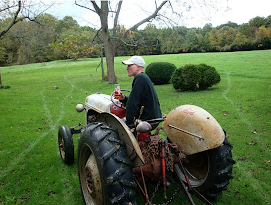
Growing up, I spent a lot of time mowing lawns. At this time of year the grass on the farm needs to be cut about once a week, depending on the weather, and the chore almost always falls to the youth in the family. It takes about four hours to mow the whole thing, and in the summer heat it's a real drag.

Most of the time I've spent behind the drone of a push mower has been forgettable. I don't get a lot of thinking done while cutting grass, and there's no real glory in it. I hate the chore so much I've mostly blocked out any memories of doing it over the past decades.

But there are a few lawn-mowing moments that remain forever in my mind. Most of them have to do with how hungry or thirsty the job made me, and how good certain foods tasted after I'd been working for hours. One memory centers on a bologna sandwich. Another, on a bowl of peaches. And still another has to do with a strawberry. My grandfather grew his own, and on one particularly hot, sticky afternoon he picked a perfect berry and handed it to me as I finished mowing. His hands were stained red from the ripe fruits.

ian-knauer-red-handed-h.jpg

The strawberry was hot from the sun and it melted into sweet, tangy summer in my mouth. It was the best berry I'd ever eaten. I can still taste it--the bright red juice and the seeds that popped as I bit down.

Often, when I see strawberries for sale at the grocery store during the colder months, I'm tempted to buy them with the hope that they'll live up to that perfect summer strawberry. They never, ever do. But still, I try. I bought strawberries a few months ago from the produce aisle. They tasted like red cardboard. They were white on the inside. And I told myself, once more: Never again.

Now it's June and the perfect berries are back. I stopped recently at a roadside stand in Lancaster, PA, where a young Mennonite girl was selling quarts of crimson berries. They were so ripe that their juices had stained her hands bright red. When I asked if I could take her picture, her cheeks turned the same color. But it wasn't her cheeks that I was interested in, it was her bright red hands, stained from handling the juicy berries all day.

ian-knauer-pick-your-own-strawberries-h.jpg

My part of the country is flecked with pick-your-own strawberry farms, and in the past week I've stopped at several. In the coming weeks, I'll stop at many more. And then I will stop eating strawberries until next June.

One of my absolute favorite early summer desserts, strawberry shortcake made with freshly baked cream biscuits, lets perfect strawberries shine. If you can get a couple of cups of them, treat yourself to this dish. Otherwise, wait until next year.

ian-knauer-strawberry-shortcake-h.jpg

Strawberry Shortcake with Cream Biscuits
Serves 4

Biscuits:
1 1/2 cups cake flour plus more for surface
1 Tbsp. sugar
1 1/2 tsp. baking powder
1/2 tsp. kosher salt
3/4 cup heavy cream plus more for brushing

Topping:
2 cups strawberries
1/4 cup sugar
2 Tbsp. orange liqueur (such as Cointreau)
1/2 cup chilled heavy cream

Biscuits: Preheat the oven to 425 degrees F.

Whisk together flour, sugar, baking powder, and 1/2 tsp. kosher salt in a bowl. Add cream and stir just until dough forms. Gently knead the dough in the bowl until it is cohesive. Pat dough on a lightly floured work surface into a 1/2"-thick round. Cut 4 squares from the dough and transfer to a lightly buttered baking sheet. Gather the scraps and reroll, cutting out more squares (you can reserve extra biscuits for another use). Brush tops of biscuits with cream, then bake 15-20 minutes or until they are golden.

Let biscuits cool completely on a rack.

Topping: Hull strawberries and cut them in half. Toss strawberries with sugar and liqueur and let macerate at room temperature.

Just before serving, whip the cream until it holds soft peaks. Split biscuits in half; spoon over each biscuit bottom some of the strawberries and a dollop of whipped cream. Top shortcakes with biscuit tops and spoon the strawberry liquid over.

Friday, May 27, 2011

That Great Chicken House in the Sky

This post can also be found on bonappetit.com (where they actually pay me to write for them!)
ian-knauer-elvis-dog-h.jpgThe menacing-looking Elvis has nonetheless been trained not to kill my chickens

I have trained my dogs not to eat my chickens. So far, they're following orders. Elvis, a boxer-pit bull mix, stands in the barnyard and drools as he watches the birds peck around in the grass, but he hasn't tried to kill any of them as of yet.

But lots of visitors come to the farm in the mild seasons, and they're encouraged to bring their dogs. The visiting pooches have not necessarily had the blood thirst trained out of them. Last weekend one of them killed one of my chickens.

ian-knauer-barnyard-chickens-h.jpgThe unknowing chickens

I brought the dead bird inside and put on a pot of water to boil. I also cued up Johnny Cash's "Dirty Old Egg-Sucking Dog" on the stereo. The song is about a dog that eats eggs and kills chickens. It's full of clever rhymes. (If, somehow, you've never heard this song, do yourself a favor and buy it. It's a great piece of Americana.)

I plunged the bird into the boiling water to loosen the feathers and plucked them. I cleaned the chicken and removed the organs, including the liver.

Here's where I could give you a recipe for roasted month-old chicken, but last week's recipe was for roast chicken, and really, how many of you are likely to have a dead month-old chicken in your fridge? So instead, let's talk about chicken livers.

I keep a resealable plastic bag of chicken livers in my freezer. Every time I cook up a bird, I add the livers to the bag. When I have about half a pound I saute them with some shallots, butter, and whatever else looks good (this time of year, that means radishes). Then I serve them as a side dish for a larger meal or on toast for lunch. They are easy to cook, cheaper than cheap, and everyone always goes gaga for them. For all those reasons, sauteed chicken livers are one of my favorite ace-up-the-sleeve kitchen tricks.

As for the chicken-killing dog? He gets a pass--this time. He can come back to the farm this summer to play and frolic with my dogs, but he'd better not kill any more of my chickens, because...

...if he don't stop eatin' my eggs up [or my chickens, for that matter]
Though I'm not a real bad guy
I'm goin' to get my rifle and send him
To that great chicken house in the sky.


--Johnny Cash

ian-knauer-chicken-liver-sandwich-h.jpgSauteed Chicken Liver Open-Face Sandwiches Photos by Ian Knauer

Sauteed Chicken Liver Open-Face Sandwiches
Serves 4 as a light lunch

1/2 baguette
2 Tbsp. unsalted butter plus more for toast
1 medium shallot, sliced
1/2 lb. chicken livers, rinsed, patted dry
Kosher salt and freshly ground black pepper
2 Tbsp. red wine vinegar
2 tsp. honey
1 tsp. Dijon mustard
Parsley leaves
Radish slices

Cut baguette into 4 open-face slices, then toast.

Heat 2 Tbsp. butter in a medium heavy skillet over medium-high heat until hot. Add shallot and saute, stirring occasionally, until golden, about 4 minutes. Add chicken livers and 1/2 tsp. each kosher salt and pepper, then saute until livers are browned but still pink in the center, 4-6 minutes. Stir in vinegar, honey, mustard, and 2 Tbsp. water and simmer until liquid is reduced to a sauce, about 2 minutes.

Spread additional butter over toasts, then top with livers, sauce, parsley leaves, and radish slices.